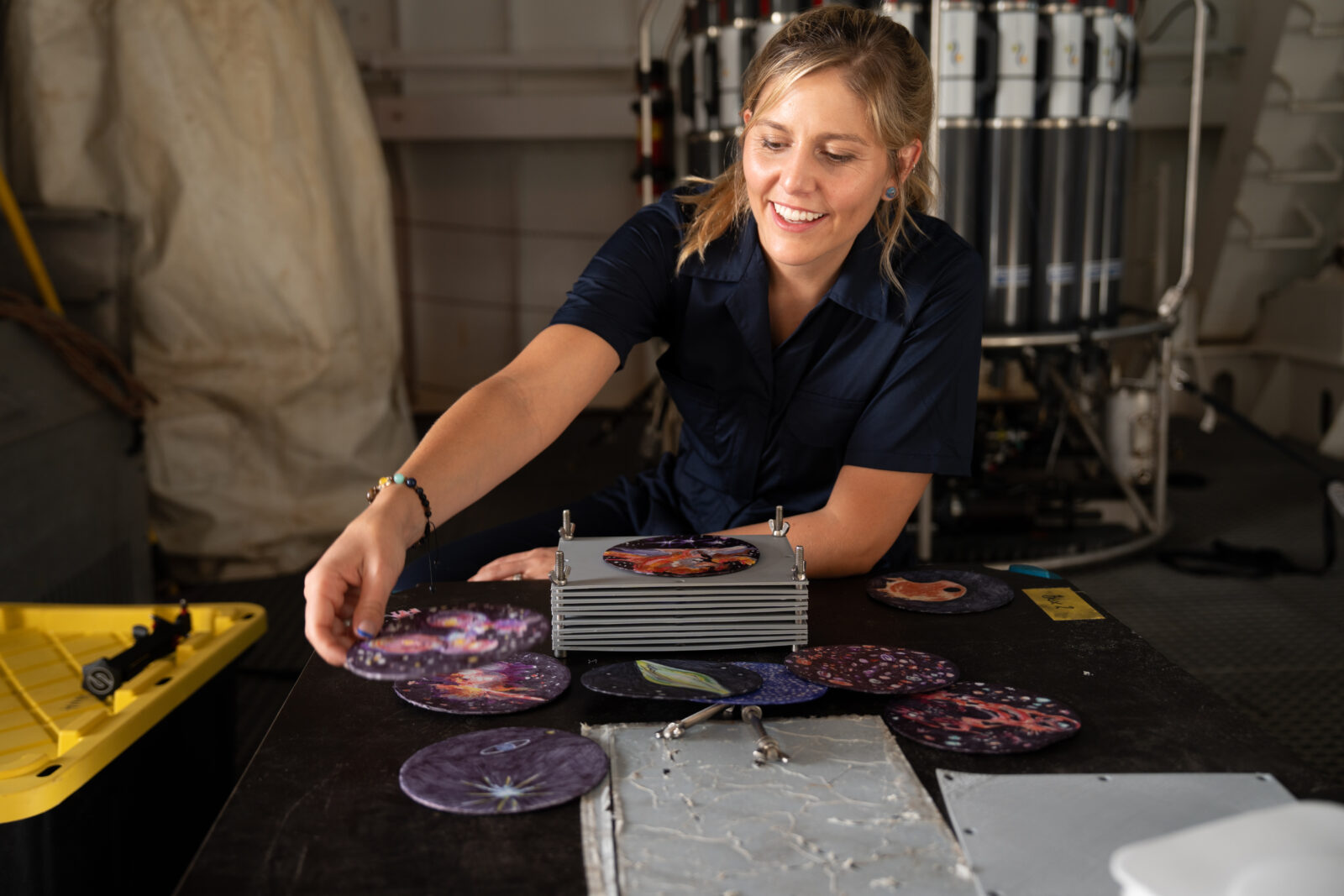
There is something profoundly different about sharing artwork in the middle of the ocean.
Not near the ocean, not in a coastal gallery, not in a museum where the sea is represented through image or metaphor — but actually at sea, aboard a working research vessel, surrounded by water in every direction, suspended in international waters with no land in sight.
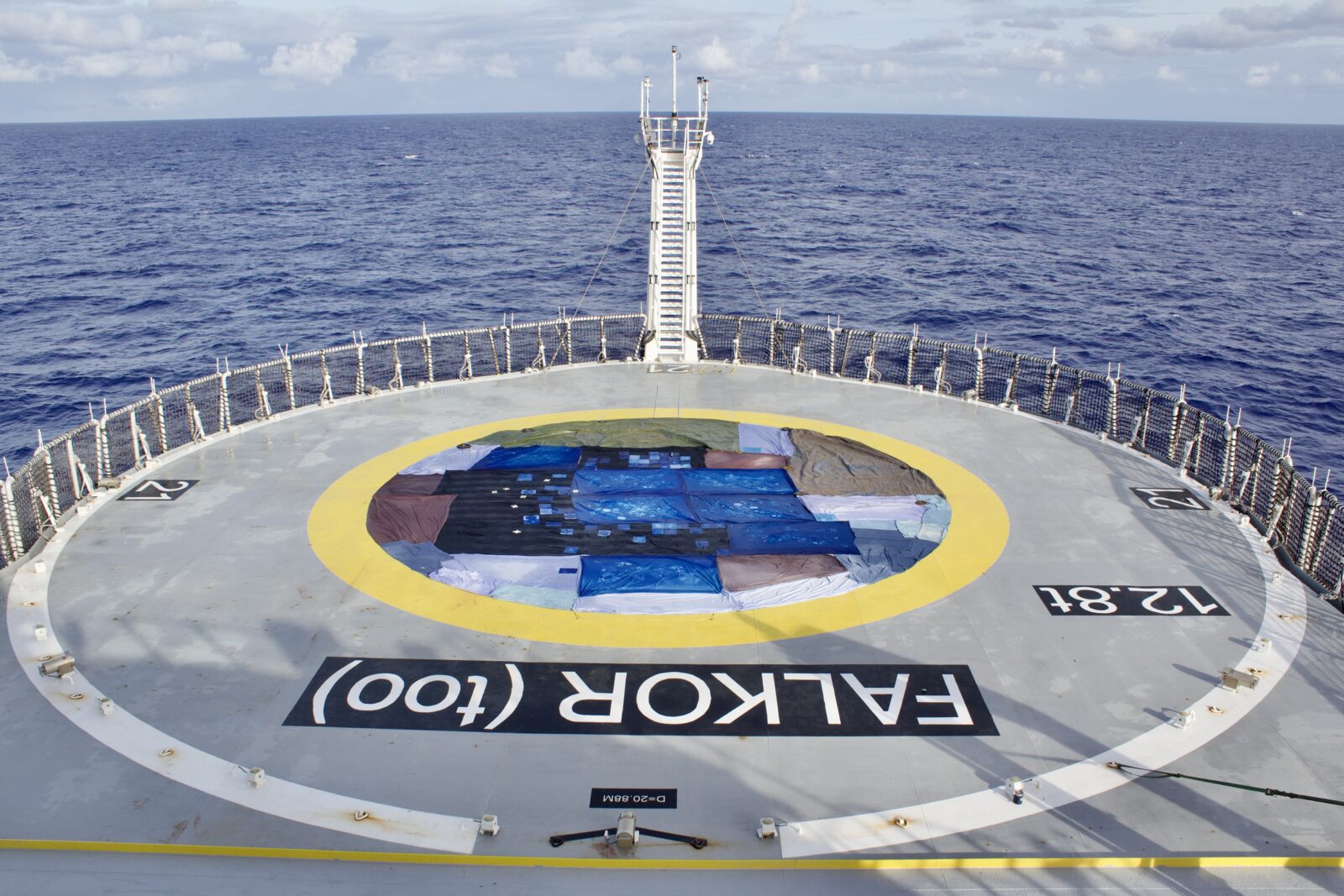
During my five-week Artist-at-Sea voyage aboard Schmidt Ocean Institute’s R/V Falkor (too), I transformed part of the ship into a temporary exhibition space. It was a pop-up show created in the middle of the ocean, for the people who had been living and working within the expedition itself: scientists, engineers, marine technicians, crew, and collaborators. Many of them told me they had never experienced an art show on a boat before. That alone made the moment feel tender and historic — not in a formal sense, but in the way that something unexpected can open a new kind of attention.
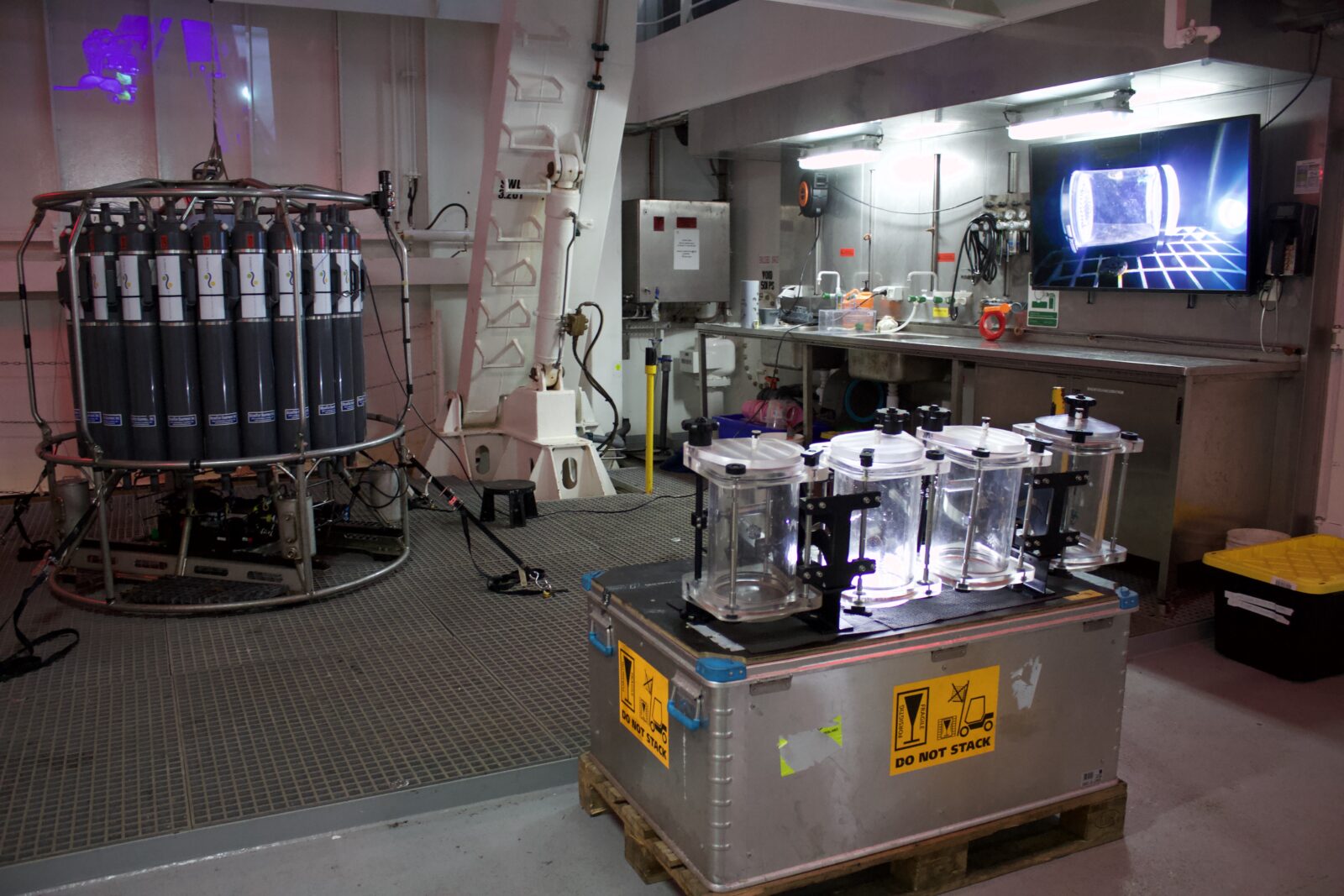
The ship was not a neutral container. It was alive with purpose. Every surface carried the presence of work: cables, tools, screens, equipment, sampling containers, dive systems, lab instruments, salt, humidity, motion. The ocean was not outside the exhibition; it was all around it. The vessel moved with the waves. The light changed constantly. The air held salt and machinery. People came in between shifts, after deployments, in the strange suspended time that only exists at sea.
Because of that, the experience of viewing art felt heightened. There was a kind of hypersensitivity to everything — to sound, scale, vulnerability, proximity, and presence. On land, we often enter exhibitions with the assumptions of daily life still wrapped around us. At sea, those assumptions fall away. The body knows it is somewhere else. The horizon is unstable. The floor moves. Communication is limited. Time stretches. Weather matters. The smallest gestures become charged.
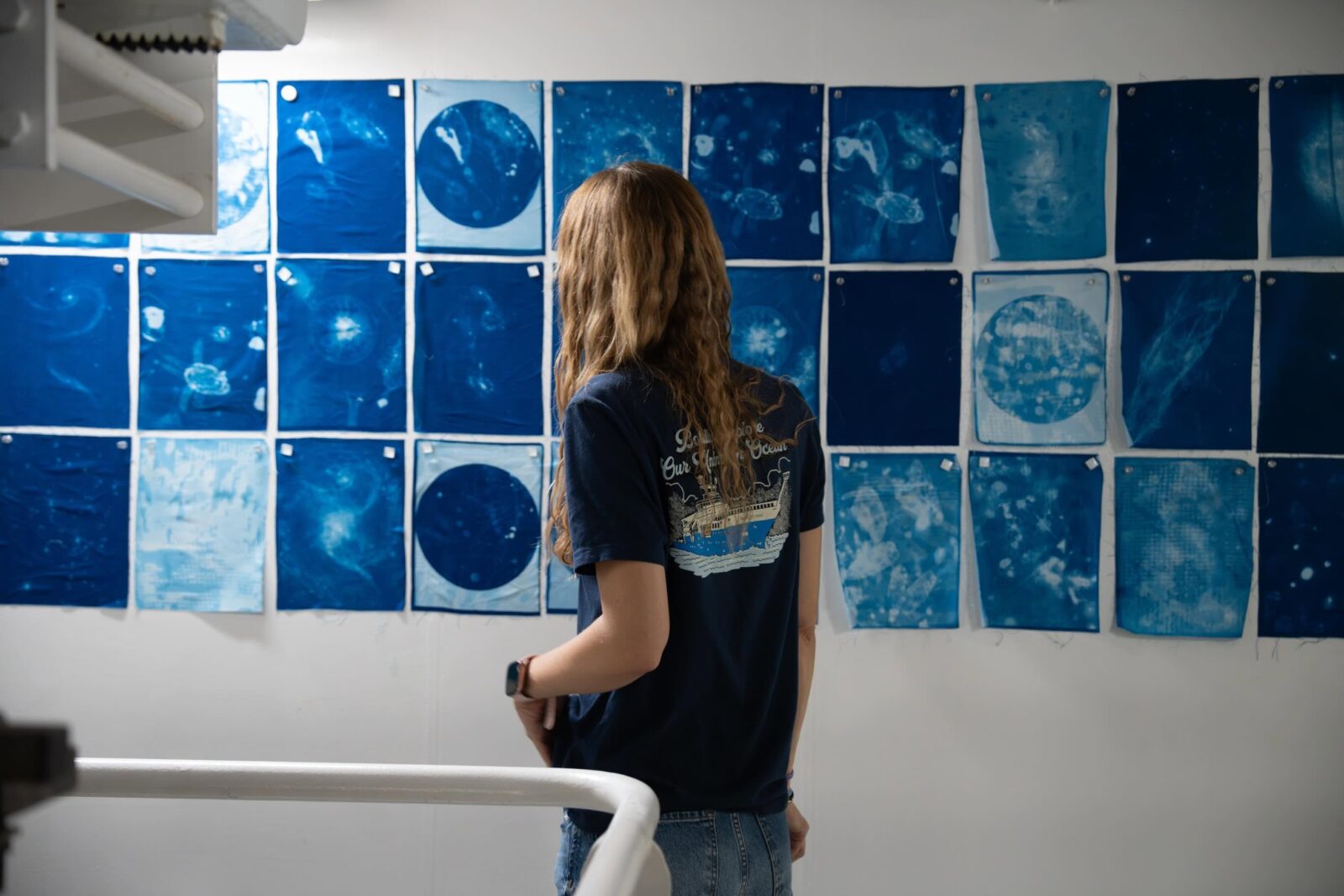
The works I shared included field journals, drawings, video projections, pressure-transformed objects, cyanotypes, and research-inspired pieces made during the voyage. Some works were still in process. Others had just returned from the deep ocean. The exhibition was not about presenting finished objects removed from their origins; it was about sharing work while it was still entangled with the environment that made it possible.
Video projections brought images of descent, darkness, water, and suspended artworks back into the ship’s interior. Drawings and field journals translated microscopic observations, diatoms, plankton, cosmic forms, and oceanic systems into intimate hand-held records. The journals felt especially important in that context — small, tactile, imperfect, and human. They held the immediacy of looking, noticing, and trying to understand.
There was something moving about watching scientists and crew encounter the work. These were people deeply familiar with the ocean through instruments, data, operations, engineering, and embodied labor. They knew the ship from the inside out. They understood its risks and rhythms. But the exhibition invited another mode of seeing: not instead of science, but alongside it. It created a pause inside the machinery of research — a space to feel the wonder, strangeness, and emotional gravity of what we were all participating in.
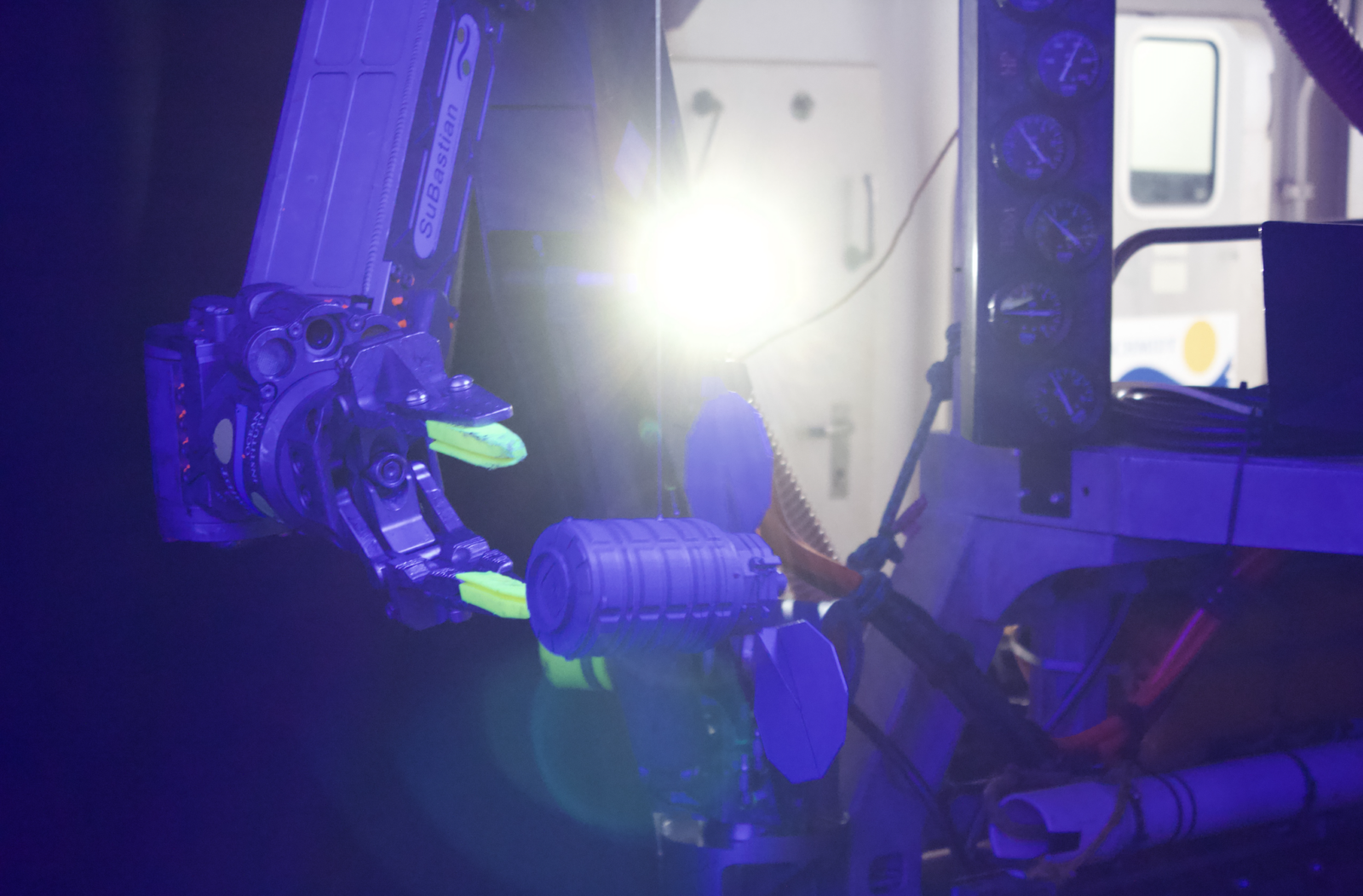
At sea, art does not have to compete with the world. It is swallowed by it, held by it, intensified by it. A drawing of plankton is seen differently when the water outside is full of invisible life. A projection of an artwork descending into the deep feels different when the ROV is nearby, when the team has just returned from a dive, when everyone understands the pressure, distance, and technical choreography required to reach those depths. A field journal about scale feels different when the entire ship is a tiny point moving across a vast blue expanse.
The exhibition also became a form of reciprocity. For weeks, I had been witnessing the labor of the expedition: the careful deployments, the long hours, the data collection, the repairs, the microscopic observations, the constant attention required to keep science moving at sea. Sharing the artwork was a way of offering something back — a translation of the experience through another language.
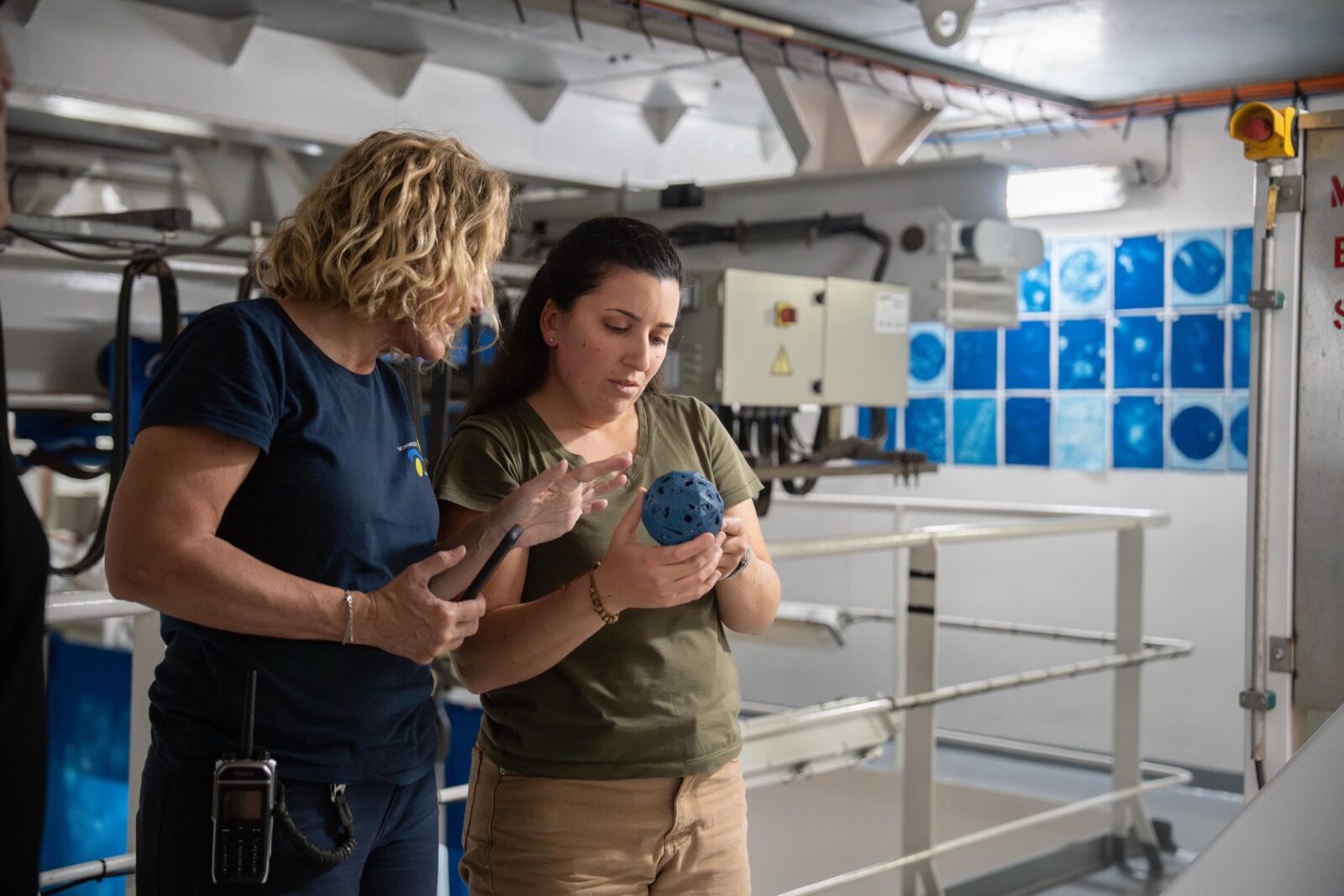
What stayed with me most was the intimacy of it. The audience was small, but deeply present. No one wandered in casually from a street. Everyone there had crossed the ocean together. Everyone knew the conditions. Everyone had felt the isolation, beauty, fatigue, and awe of being far from land. That shared context made the work feel more porous. The boundary between artist, viewer, subject, and site became less fixed.
It changed how I think about exhibitions. I have always been interested in extreme environments — space, analog missions, the stratosphere, the deep sea — but this experience revealed that an exhibition can also be an expedition. It can be something temporary, responsive, and alive. It can happen far from institutions and still hold deep meaning. It can exist for a specific community, in a specific place, at a specific moment, and never be repeatable in quite the same way again.
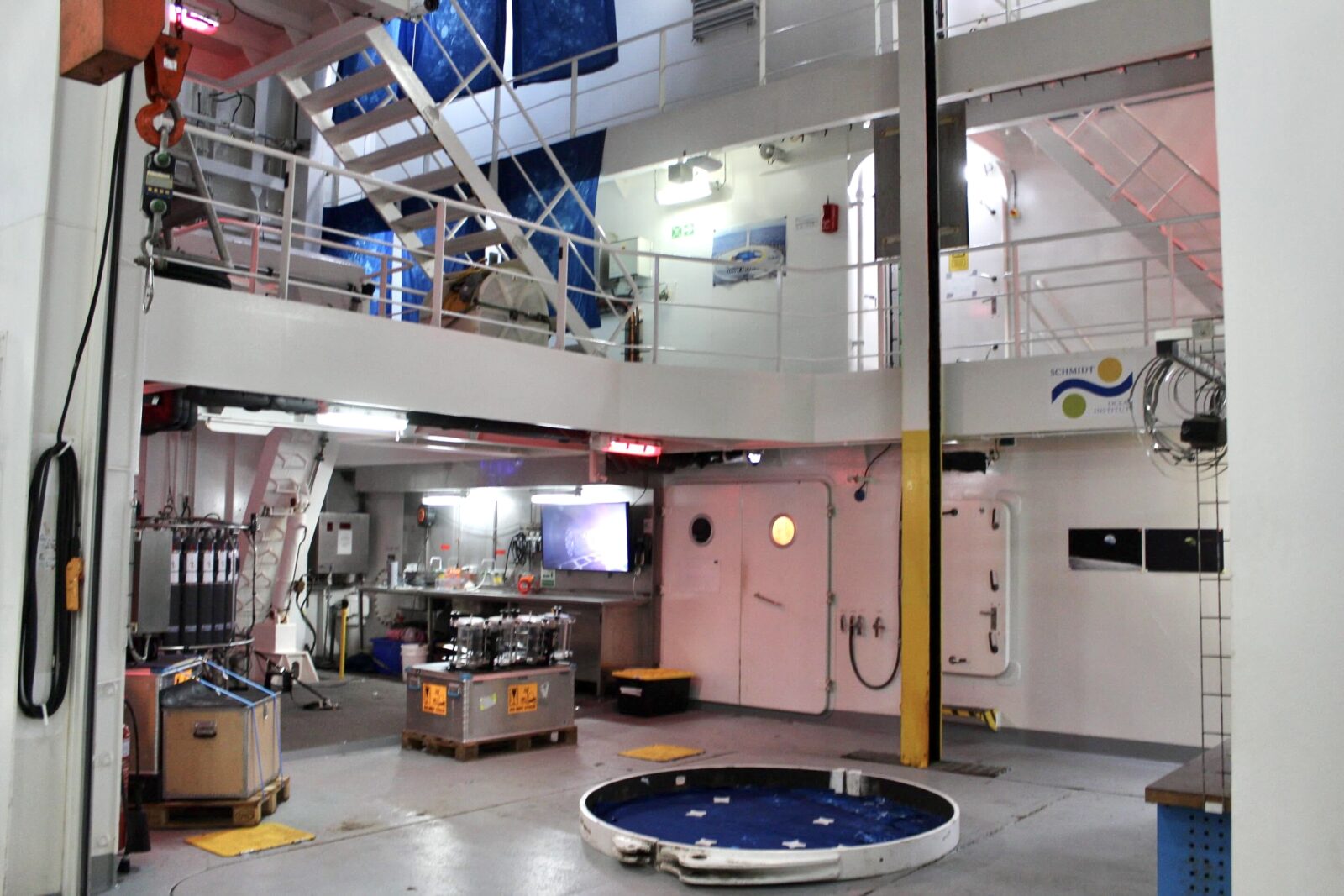
Hosting an art show aboard Falkor (too) in international waters reminded me that art is not only about objects. It is about conditions of attention. It is about creating moments where people can see what they are inside of differently.
In the middle of the ocean, surrounded by darkness, data, machinery, plankton, pressure, salt, and stars, the artwork became part of the ship’s living memory. It was not separate from the voyage. It was one of the ways the voyage came into view.