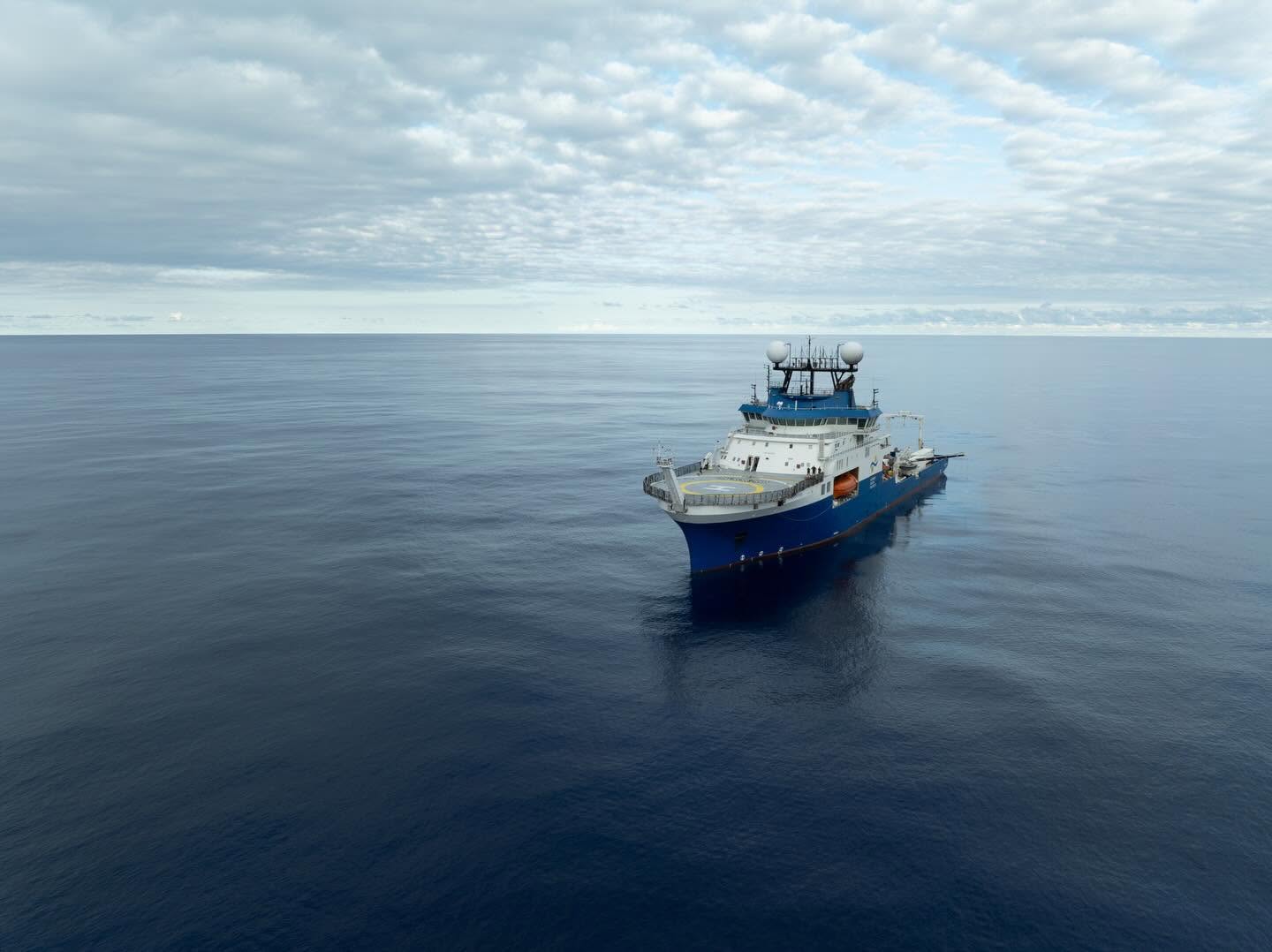
Falkor (too), International Waters
This spring, I joined Schmidt Ocean Institute’s SUBSEA Part 1 expedition as Artist-at-Sea aboard R/V Falkor (too), traveling through the South Atlantic subtropical gyre — one of the largest continuous biomes on Earth. From the surface, this part of the ocean can appear vast, blue, and empty. But beneath that apparent emptiness is a hidden world of exchange: microscopic life, sinking particles, nutrient cycles, and organisms quietly shaping the planet’s atmosphere and climate.
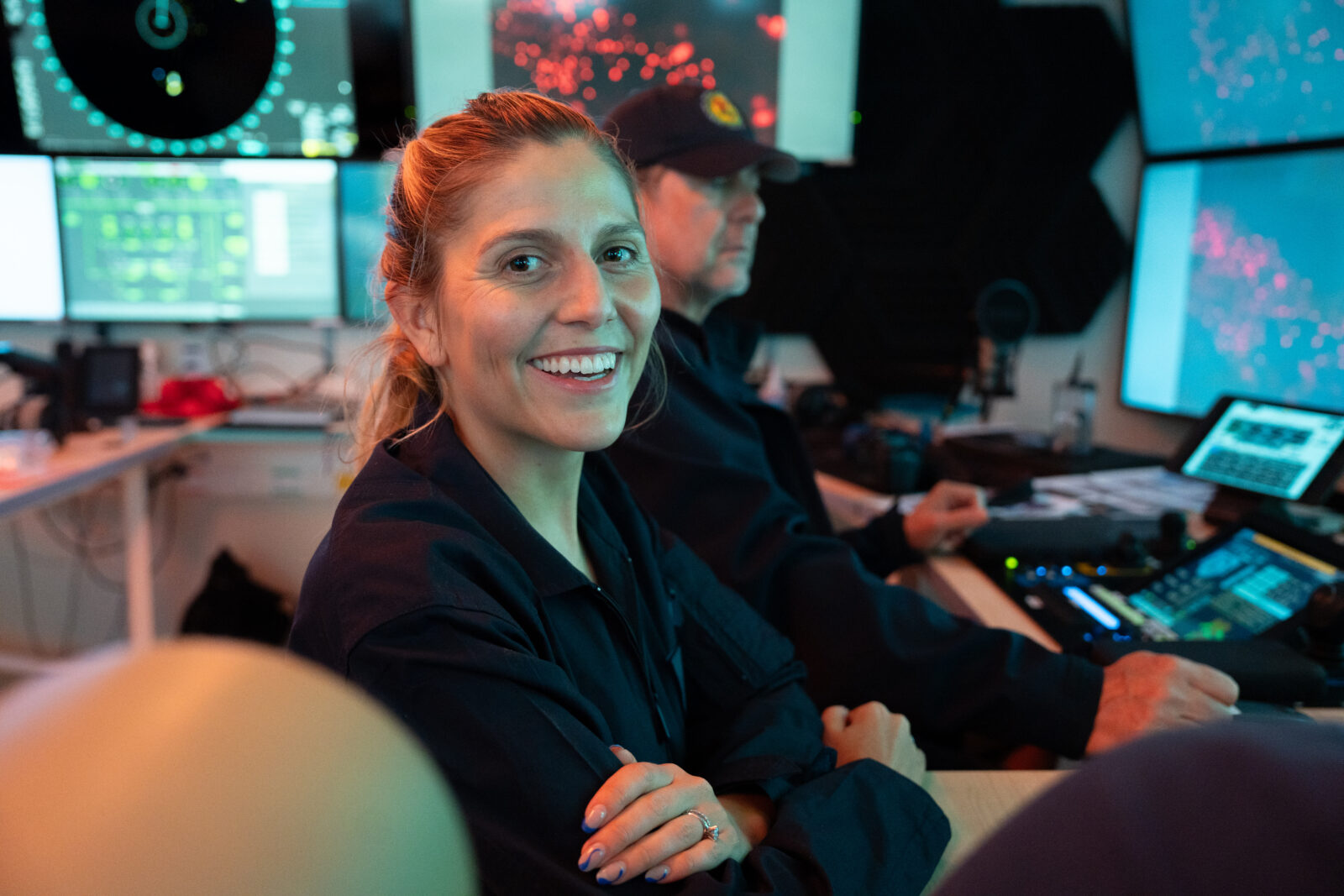
The scientists on board were studying the movement of nutrients between the sunlit photic zone and the deeper twilight zone, where life continues in lower light and where carbon, oxygen, nitrogen, phosphorus, and iron circulate through living and nonliving forms. I was struck by the idea that the ocean has a canopy and an understory, much like a rainforest — with phytoplankton at the surface transforming sunlight and carbon dioxide into life, and deeper layers sustaining processes we are only beginning to understand.
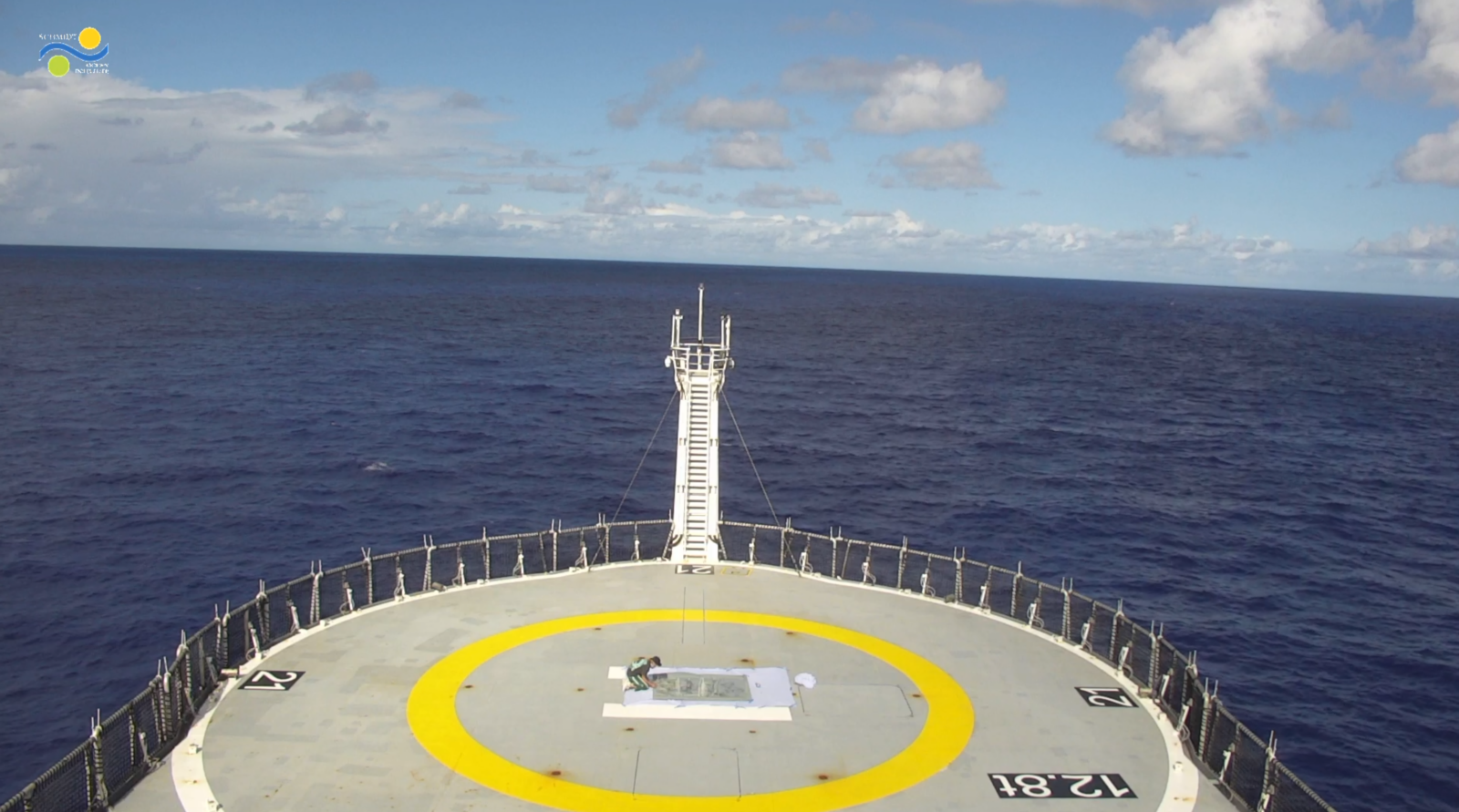
As an artist exploring deep space and deep Earth, I felt immediately at home in this threshold. The open ocean became both a site of research and a studio: a place where scientific instruments, ship rhythms, microscopic organisms, and vast planetary systems began to fold into one another. Each day, I watched the science team deploy instruments, collect samples, examine data, and translate the invisible into forms of understanding. In parallel, I began translating the experience through drawing, cyanotype, video, field notes, and material experiments.
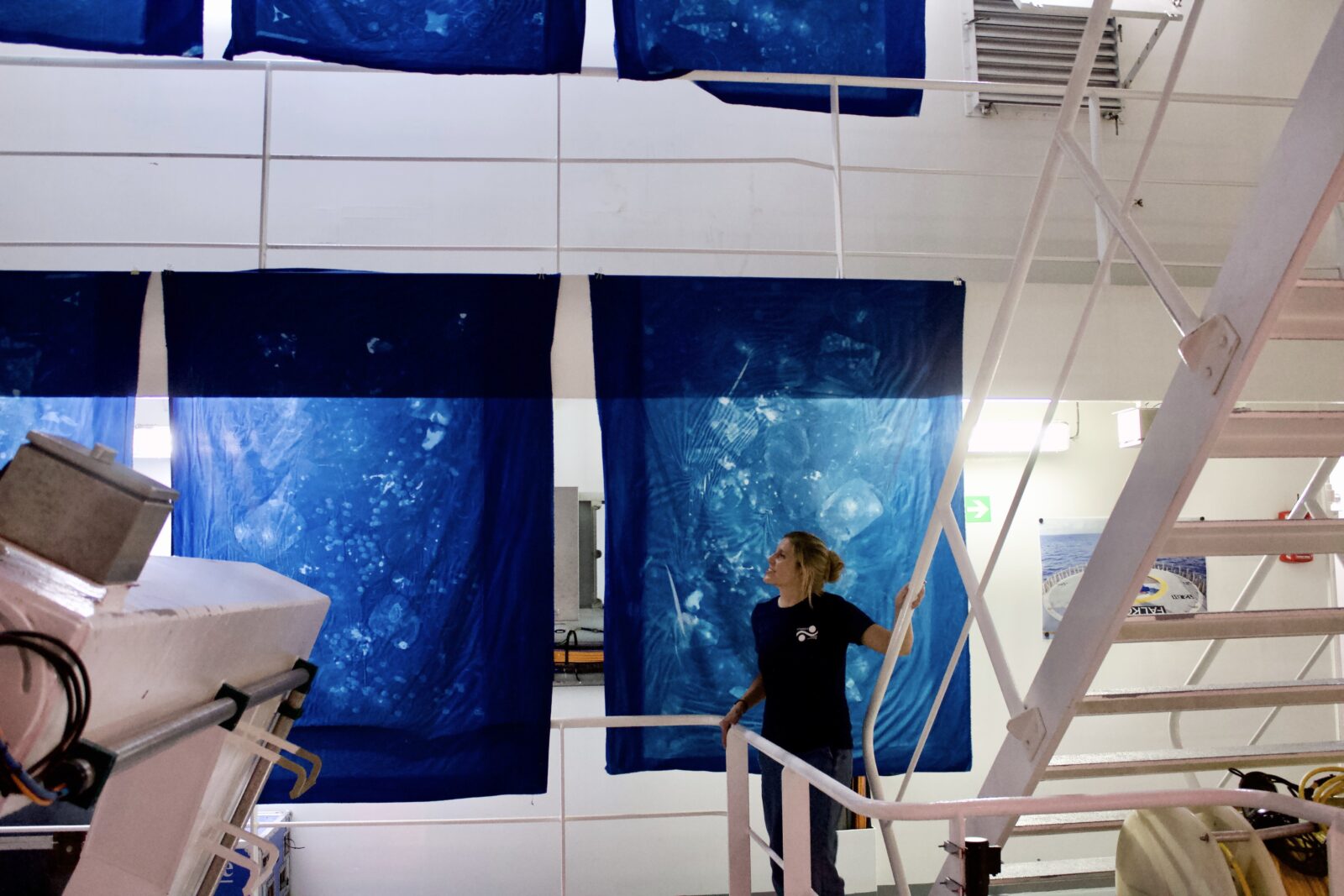
The artwork I created at sea emerged from this sense of layered perception. I was interested in what we cannot see from the surface: phytoplankton, zooplankton, particles sinking through the water column, and the delicate exchanges that sustain life far beyond human vision. Some works responded directly to microscope imagery and biological samples. Others explored the movement of the ship, the horizon line, the deep blue field of the gyre, and the emotional experience of being suspended between ocean and sky.
For me, the expedition revealed the ocean as a living planetary system rather than a backdrop. The subtropical gyre is sometimes described as nutrient-depleted, even desert-like, yet it plays an enormous role in Earth’s productivity and carbon cycling. That paradox stayed with me: a place that looks empty, but is full of processes essential to life. It reminded me of space — another vastness we often imagine as empty, but which changes how we understand our own planet.
My Artist-at-Sea practice became a way of paying attention. I made work slowly and responsively, allowing the research to shape the forms. I thought about the ocean as archive, atmosphere, circulatory system, and origin story. I thought about the smallness of the human body on a research vessel, and the immensity of the systems we depend on but rarely perceive. I thought about how art can help us feel what data helps us know.
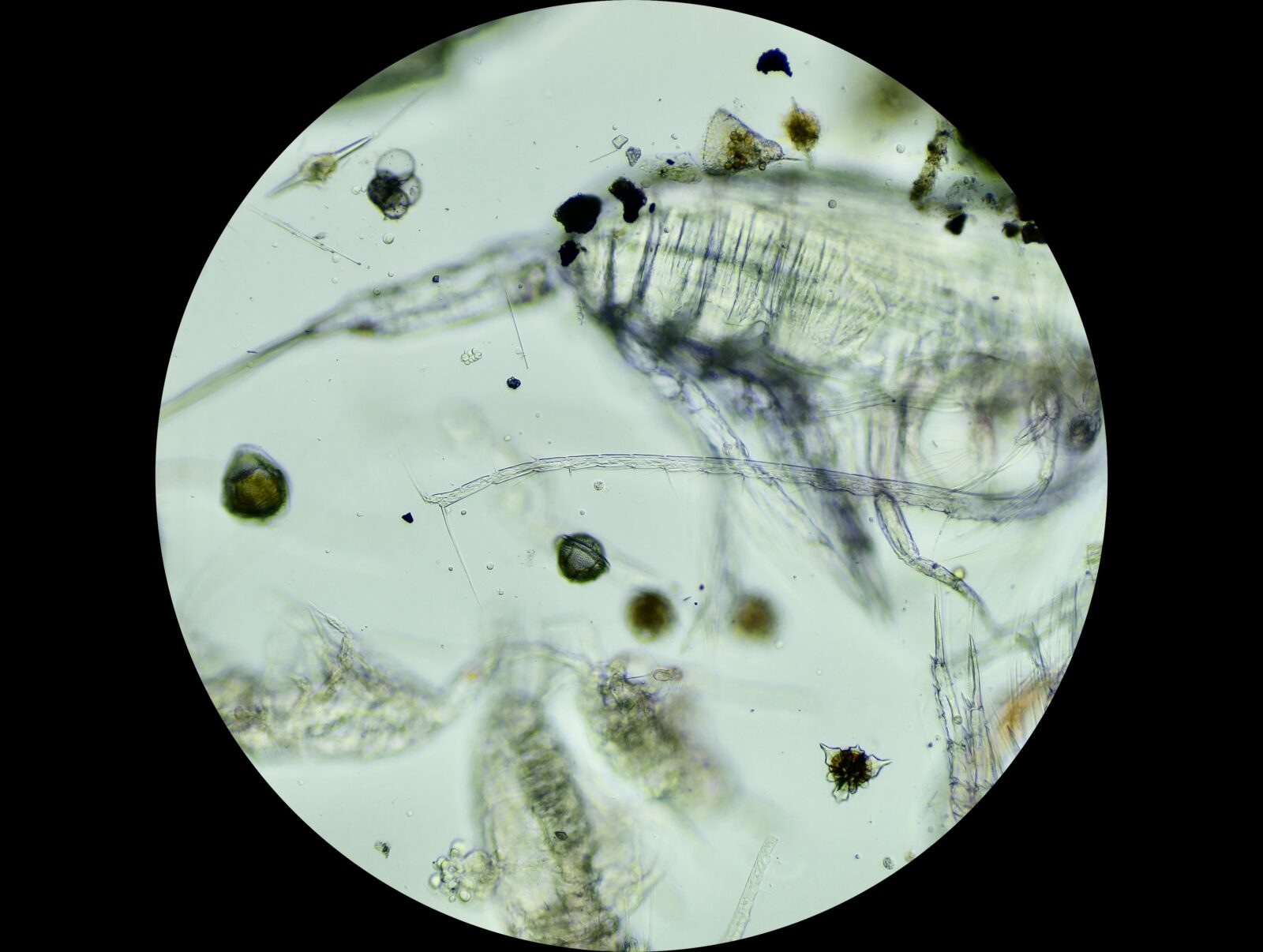
Being at sea with Schmidt Ocean Institute expanded my understanding of exploration. It was not only about going somewhere remote, but about learning how to look more closely. It was about recognizing that the most powerful planetary transformations often happen at scales too small, too deep, or too slow for us to notice. Through the scientists’ work, the ocean became legible in new ways. Through art, I tried to make that hidden life felt.
I left the expedition with a deeper sense of interconnection — between the ocean and atmosphere, plankton and planets, scientific inquiry and artistic imagination. The experience reaffirmed something central to my practice: the farther we travel into extreme environments, the more clearly we can see the fragile systems that make life on Earth possible.
The deep ocean is not separate from us. It is within every breath, every climate pattern, every living system we belong to. My time aboard Falkor (too) was a reminder that the unseen world is not distant. It is holding us.